
Music is a universal language that embodies one of the highest forms of creativity. A high-quality music education should engage and inspire pupils to develop a love of music and their talent as musicians, and so increase their self-confidence, creativity and sense of achievement
Curriculum
Music
Subject Intent: Music
Music reflects the cultures and societies we live in and come from. Teaching music therefore enables our pupils to better understand the world in which they live. At Greystones, we equip pupils with knowledge of music as a vehicle for personal enjoyment, development and expression.
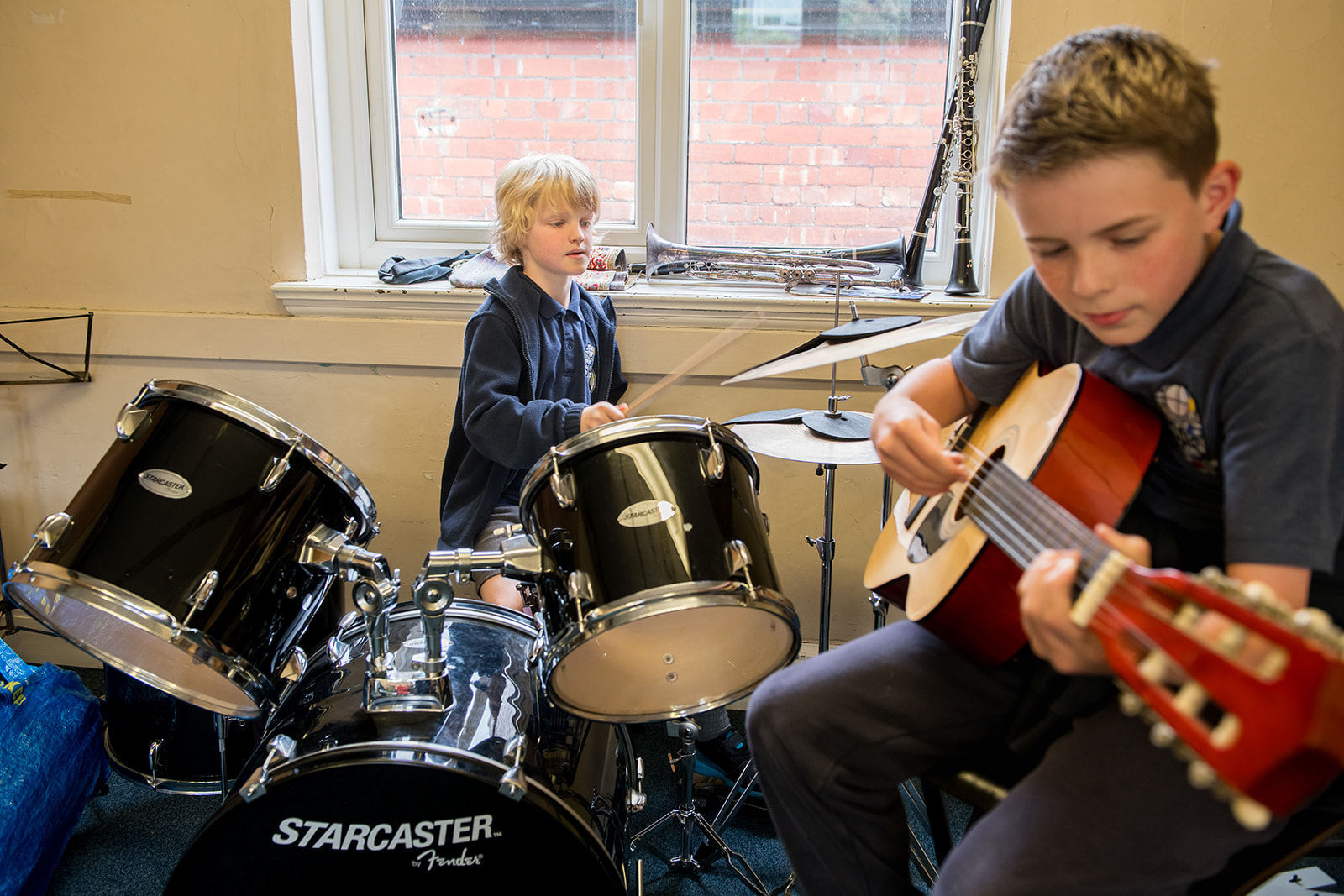
We recognise that learning about music and participating in creating music play an important part in supporting children to feel part of a community: we provide opportunities for all to create, play, perform and enjoy music both in class and through other musical experiences, such as our choirs and our orchestra. Through performance opportunities, children can showcase their learning and performance skills to their peers and a wider audience. It is an important part of how children at Greystones develop their voice and sense of belonging to a team, two of our core values as a school.
The level of musical excellence achieved by so many of our pupils, via our core curriculum and wider school offer, also demonstrates a third value for the pupils in our school – We are Ambitious!
Subject Aims: Music
The foundational skills in our music curriculum focus on singing, listening, composing, and performing. Pupils learn to use their voices, play tuned and untuned instruments, listen with attention, and create their own musical patterns.
Through our Music curriculum, we develop pupils who:
- Enjoy and have an appreciation for music (Listening)
- Listen to, review and evaluate music across a range of historical periods, genres, styles and traditions (Listening)
- Listen to and evaluate the work of great composers from a variety of classical traditions (Listening)
- Can sing and use their voices to create different effects (Singing)
- Create and compose music, both on their own and with others (Composing)
- Use a range of musical language (Listening, Composing)
- Make judgements and express personal preferences about the quality and style of music (Listening, Composing)
- Have opportunities to play a wide variety of instruments, both un-tuned and tuned (Performing, Composing)
- Use technology if appropriate to listen to, adapt and create music (Listening, Composing)
- Take part in performances with an awareness of audience (Performing)
- Pupils learn to develop appraisal and comparison skills using various genres of music, as well as research, investigation and analysis skills using various instruments, time signatures, rhythms musical forms, music genres and technology.
How we teach Music at Greystones
We use the Sparkyard Music scheme of work as our starting point to build strong musical foundations for all learners. In addition to this, the Model Music Curriculum alongside BBC Ten pieces is used to enhance our school’s well-sequenced Music Curriculum. This provides a rich, progressive and inclusive Music curriculum from Foundation Stage to Year 6. The curriculum is carefully sequenced to ensure children build knowledge, skills and understanding of technical skills over time whilst experiencing and enjoying a broad range of music disciplines, instruments and ways of engaging with music.
In Foundation Stage and KS1, children are taught Music by their class teachers, through units that teach skills and knowledge, while encouraging exploration, experimentation and creative decision-making. This is strengthened by a wide range of musical experiences across all years, including Concerteenies Musical Stories, Halle Orchestra and Brigantes Orchestra visits amongst others.
In KS2, children follow the Sparkyard music scheme taught weekly by Music specialists during PPA lessons. Our music curriculum covers the statutory National Curriculum for England and satisfies recommended practices outlined in the Model Music Curriculum.