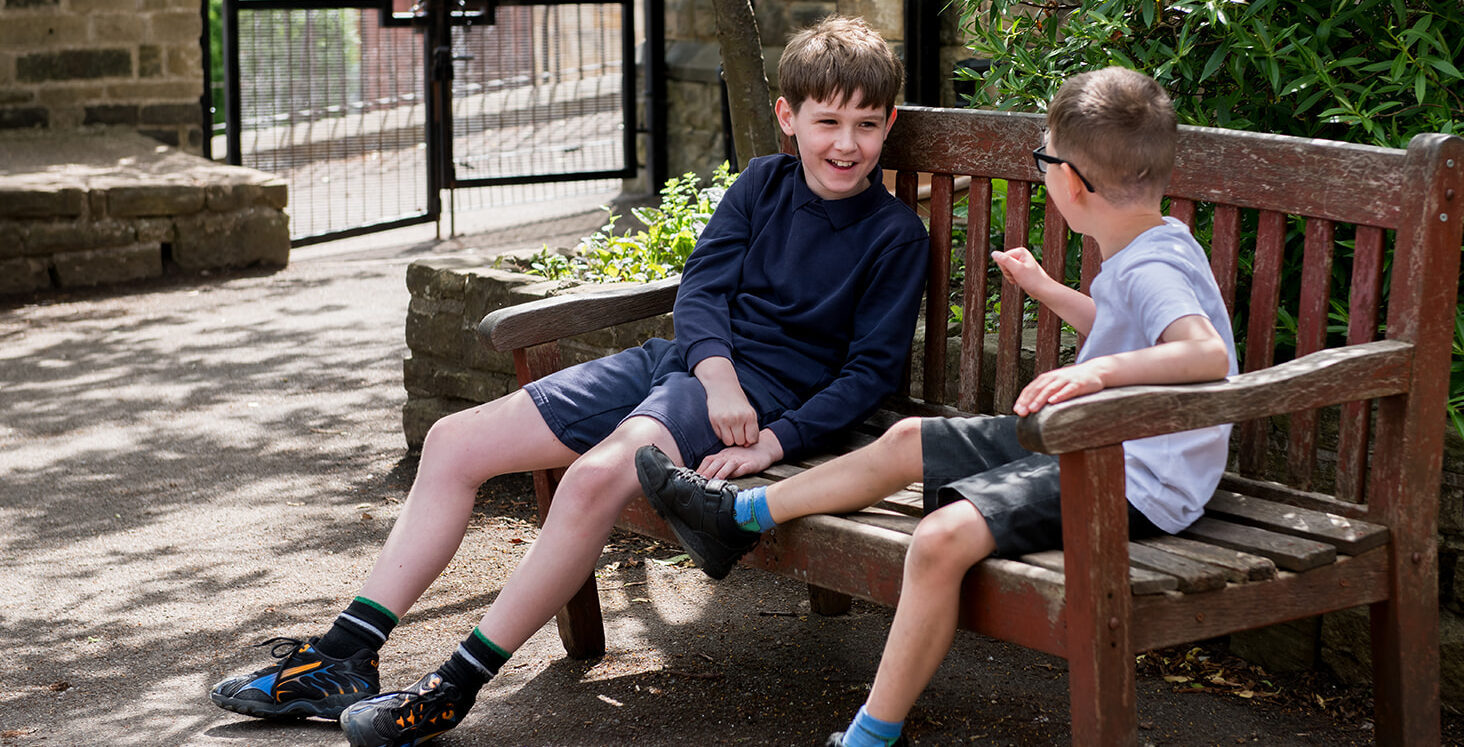
Oracy is the effective use of spoken language and it is an integral part of our school’s planned, everyday pedagogy for every child; an ambitious thread running through all aspects of our school life.
Curriculum
Speaking & Listening
Oracy and the Greystones values
The quality of their spoken communication shapes people’s thinking, decision-making, and lives. When talk is effective, we collaborate, reason, and create. When it’s not, misunderstandings grow, ideas stall, and voices go unheard.
Our oracy intent for all children aligns with our Greystones value of ‘We have a Voice’. However, it is also linked to Ambition, Curiosity, Respect and learning to be a Team. To function well in the world, now and in the future, all our children need to be confident and considerate communicators. Learning to use the spoken word to communicate well is an essential entitlement of all children and we believe school has a fundamental role in this.
Speaking and Writing
Developing children’s oral communication is an fundamental part of our writing curriculum, both as a curriculum outcome in itself and a vehicle for developing vocabulary, sentence structure, composition and syntax. All children are supported through deliberate practice to express their thoughts and ideas fluently and they learn to practise speaking in full sentences (in all subjects).
We use the Voice 21 Skills Framework as a structure for progression and assessment, embedding this into daily school life. The-Oracy-Framework-2021-1-1.pdf
Further information
We focus on three strands of oracy:
- Learning through talk – through spoken language we gain knowledge and understanding. Much of this is daily, classroom life.
- Learning how to talk – developing the skills to use spoken language to make something happen.
We aim for children to become increasingly more able to:
• express issues and ideas clearly,
• speak clearly, using formal language, varying expression, tone and volume,
• listen carefully, to understanding a speakers’ conclusion or opinion
• respond to others with questions and comments
• contribute purposefully to group discussion
• show agreement or disagreement, giving reasons in a respectful manner
• use a wide and interesting vocabulary, appropriate to the topic being discussed, or the audience that is listening.
- Learning about talk – understanding how spoken language works and how it is different to written language.